Effective February 6th, we will be open the first two Saturdays of every month from 8AM to 2PM. Our Monday-Friday hours will remain 8AM to 5PM.

Close
×

Would you like to switch to the accessible version of this site?

Go to accessible site Close modal window

Don't need the accessible version of this site?

Hide the accessibility button Close modal window
Accessibility View Close toolbar
Pearl River Veterinary Hospital

(985) 863-5404

Open mobile navigation
  • Home
  • New Patient Center
    • Online Forms
    • What to Expect
    • Veterinary Resources
    • Payment Options
    • Pet Wellness Program
  • About Us
    • Meet The Doctors
    • Meet Our Staff
  • Our Services
    • Bathing and Boarding
    • Dentistry
    • Internal Medicine
    • Radiology
    • Surgery
    • Well Health Exams
  • Petsimonials
    • Memorials
      • Submit Your Pet Memorial
  • Contact Us
    • Appointment Request
  • Patient Portal
  • Blog
  • Veterinary Topics
  • Home >
  • Articles >
  • Choosing Your Pet >
  • Exotics >
  • Birds >
  • Lovebirds

Lovebirds

  • Created in Choosing Your Pet, Exotics, Birds
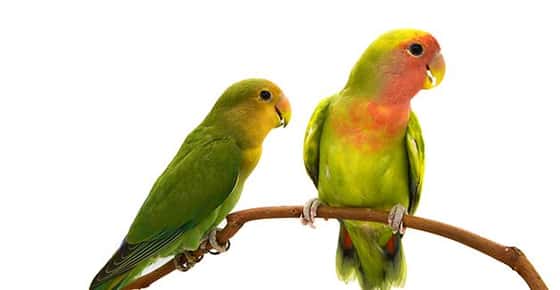
Image of lovebirds.

Lovebirds are very social and form deep bonds with their owners. If you are short on time to spend with your lovebird, then it is best to get him or her a companion.

There are several species of lovebirds, such as the genus Agapornis. But the most commonly found species in the pet trade include peach faced lovebirds, or Agapornis roseicollis, masked lovebirds (Agapornis personata) and Fischer's lovebirds (Agapornis fischeri). There are many color mutations found in peach faced lovebirds and several mutations in some of the other species, so there are many color variations of lovebirds available. Lovebirds are small, compact parrots about 5-6 inches in length and can live up to 15 years or more.

Temperament

Very active, curious, and playful, lovebirds pack a lot of personality into a small package. They are also feisty little birds. They are very social and form deep bonds with their owners and are sometimes very cuddly birds, but their intense personalities can also make them prone to nipping and territorial aggressiveness and jealousy. Hand-raised babies make the best pets. Some experts believe that females are more prone to jealousy and territoriality than males.

Find a Hand-Raised Baby

Hand-raised babies definitely make the best pets. Still, regular handling and training are needed to maintain a tame lovebird (so a hand raised baby that hasn't been handled much as it gets older may be hard to hand tame again). If getting an older lovebird try to find one that was hand raised and has been handled regularly and has some training. Older lovebirds that are not hand tamed may require a great deal of patience for taming.

Social Needs - A Common Myth

A common myth about keeping lovebirds is that they should always be kept in pairs. If you have more than one lovebird they may become more deeply bonded to each other that to you. A single lovebird will do well, as long as it gets the social interaction, contact, affection, and attention that it needs from its human family members. If you are short on time to spend with your lovebird, then it is best to get him or her a companion, though.

Vocalizations and Speech

While not as loud as some larger parrots, lovebirds can produce a loud high pitched screech, especially if looking for your attention. Their normal chirps and squawks are not overly loud, but they do like to chatter. As a general rule, they are not known for their ability to mimic speech or sounds, although there are exceptions. Some say females are more apt to mimic sounds or speech than males.

Housing Lovebirds

As a bare minimum, I would recommend a cage at least 2 feet wide by 2 feet long (and 2 feet tall), but a larger cage is definitely better (with the length being relatively more important than the height). Bars should be no more than 1/2 to 5/8 inches apart, and should be oriented horizontally to allow the birds climb the sides of the cage. Avoid round cages. Provide a variety of perch sizes (including natural branches if possible) as this is healthier for a caged bird's feet.

Feeding Lovebirds

Lovebirds should be fed a variety of foods. A good pellet diet can form the basis of the diet, supplemented by a variety of fresh foods and some seeds (seeds should make up less than 25 percent of the total diet). A cuttlebone can be provided for extra calcium.

Toys

Lovebirds are quite aggressive chewers, which must be kept in mind when choosing toys. Make sure there are no small parts that can be chewed off and ingested, and no clips, loose strings, or other parts in which your bird could get its beak, feet, or head trapped. Safe toys include wood, sisal, leather, acrylic, and rawhide toys (including hanging toys as long as they are not long enough to strangle your bird), bells, and ladders. As well, household items such as the cardboard tubes from paper towel rolls, paper cups, ink-free cardboard, and dried pasta shapes may also be used by your lovebird. Lovebirds are very active and playful so it is a good idea to have lots of toys on hand to rotate through the cage to keep them occupied. All toys including their hanging devices should be zinc and lead free. Cotton ropes are good too, but may be best used only under supervision since threads can come loose and entangle birds easily.

  • Pet Health
    • Chronic Conditions
    • Digestive and Oral Health
    • Diseases and Viruses
    • Pests and Parasites
    • Orthopedics
  • Today's Veterinarian
  • Choosing Your Pet
    • Finding Your Pet
    • Cats
    • Dogs
    • Exotics
      • Amphibians
      • Birds
      • Reptiles
        • Lizards
        • Turtles
    • Small Mammals
      • Ferrets
      • Rabbits
      • Domesticated Animals
        • Prairie Dogs
      • Pocket Pets
        • Chinchillas
        • Guinea Pigs
        • Hamsters
        • Hedgehogs
        • Rats
    • Livestock
      • Cows
      • Donkeys, Horses & Mules
      • Goats
      • Pigs
      • Poultry
      • Sheep
  • Living With Your Pet
    • Bringing Your Pet Home
    • Children and Pets
    • Providing Care
    • Travel
    • Saying Goodbye
  • Newsletter Library
    • Cats
    • Tips for Pet Owners
    • Behavior & Training
    • Fleas & Parasites
    • Keeping Pets Healthy
    • Recognizing Illness
    • Nutrition & Food
    • Pet Dangers
    • Seasonal Topics
    • Visiting the Vet
    • Equine
    • Newsletter Archive
      • Fun with Pets
      • Unbelievable Pets
  • Video Newsroom
    • Health Topics
    • Technology and Science
    • Other Interests
  • Newsletter Library
  • Client Survey
  • Pets4Kids

Contact Us

For More Information

Error!

    • Make An Appointment

      We will do our best to accommodate your busy schedule. Schedule an appointment today!
      Schedule Now
    • Contact Us

      Our patient forms are available online so they can be completed in the convenience of your own home or office.
      View Forms
    • Online Forms

      Our patient forms are available online so they can be completed in the convenience of your own home or office.
      View Forms

    Office Hours

    Our Regular Schedule

    Monday:

    8:00 am-5:00 pm

    Tuesday:

    8:00 am-5:00 pm

    Wednesday:

    8:00 am-5:00 pm

    Thursday:

    8:00 am-5:00 pm

    Friday:

    8:00 am-5:00 pm

    Saturday:

    Open the first two Saturdays over every month from 8AM to 12PM.

    Effective May 1, 2024

    Sunday:

    Closed

    Location

    Find us on the map

    • "All of the staff is compassionate and caring. They will love on your animals when you can't!"
      The Oilers Life Stacy L. M.
    • "Wished I would have found this Vet a long time ago. They are indeed animal lovers and very thorough. Took extremely good care of my pets. Very clean and very reasonable.
      Not money hungry like most. Very conscientious of pet's needs and owner's concerns.
      Than you Pearl River Vet Hospital"
      Jackie M.
    • "We LOVE Dr. Bradburn!!! :) We would recommend him to anyone!!"
      Kristie R.

    Featured Articles

    Read about interesting topics

    • March Newsletter: How to Keep Your Cat Safe When Outdoors

      Wondering how your cat can safely spend time outdoors? ...

      Read More
    • March Newsletter: How to Choose Safe Blankets for Pets

      Do you know how to pick a safe blanket for your pet? ...

      Read More
    • February Newsletter: How to Reduce Dental Anxiety in Pets

      Does your pet hate toothbrushing? These tips could reduce dental anxiety. ...

      Read More
    • February Newsletter: How to Safely Change Your Cat’s Food

      Buying a new food for your cat? Find out how to switch foods safely. ...

      Read More
    • January Newsletter: Signs Your Pet Needs a Wellness Exam

      Does your pet need a wellness exam? ...

      Read More
    • January Newsletter: How Your Veterinarian Can Help If Your Pet Ingests Something Toxic

      Has your pet eaten something it shouldn't have? Find out how your vet can help. ...

      Read More
    • December Newsletter: Signs Your Pet Needs a Professional Cleaning

      Do you know when your pet needs a professional cleaning? ...

      Read More
    • December Newsletter: Simple Ways to Keep Your Home Flea-Free for Your Pet’s Well-being

      Never want to see another flea again? Try these tips for a flea-free home. ...

      Read More
    • November Newsletter: The Importance of Bloodwork for Your Pet’s Health

      Wondering if your pet really needs bloodwork? Find out the benefits of blood tests for your furry friend. ...

      Read More
    • November Newsletter: Turkey Day Tips for Pet Owners

      Don't forget about your pet when making Turkey Day preparations. ...

      Read More

    NEWSLETTER SIGNUP

    Sign up for more articles

    Error!

      Connect With Us

      • Copyright © 2026 MH Sub I, LLC dba iMatrix
      • Admin Log In
      • Site Map
      • Terms Of Service
      • Privacy Policy